27/02/2019
Aerobic and Anaerobic metabolism
Aerobic metabolism is the way that your body creates energy through the combustion of carbohydrates, amino acids and fats in the presence of oxygen. Combustion means burning, which is why this called burning sugars, fats and proteins for energy.
aerobic metabolism is used for the sustained production of energy for exercice and other body functions.
Examples: walking, running or cycling with sustained effort.
Anaerobic metabolism: Is the creation of energy through the combustion of carbohydrates in the absence of oxygen. This occurs when your lungs cannot put enough oxygeninto the bloodstream to keep up with the demands ofyour muscles energy.
It´s generally used only for short bursts of actvity.
Differences of anaerobic and aerobic metabolism
Anaerobic metabolism is not as efficient as aerobic metabolism. A molecule of glusoce can only produce 3 ATP molecules under anaerobic metabolism, while it produces 39 with aerbic metabolism. ATP is what fuels the muscles.
Anaerobic metabolism can only use glucose and glycogen, while aerobic metabolism can also break down fats and protein. Intense bouts of exercicein the anaerobic zone and in the red-line zone with a heart rate over 85% of your maximum heart rate will esult in using anaerobic metabolism to fuel the muscles.
While your body will naturally use the energy parthways that will best get the job done, you have a choice in how strenuously you exercice. Training programs for different sports and activities are designed to make the best use of aerobic and anaerobic metabolism.

06/02/2019
Vocabulary Unit:3
Adaptable: Adjust or modify appropiately.
Alternative: Affording a choice of two or more things.
Chemical: A susbstance produced by or used in a chemical process.
Computer-generated: Something created by the computer.
High-tech: New/high technology.
Innovative: Tending to innovate or characterized by innovation.
Mechanical: Of or relating to machinery or tools.
Sustainable: Able to be maintained at a certain rate or level.
Alternative: Affording a choice of two or more things.
Chemical: A susbstance produced by or used in a chemical process.
Computer-generated: Something created by the computer.
High-tech: New/high technology.
Innovative: Tending to innovate or characterized by innovation.
Mechanical: Of or relating to machinery or tools.
Sustainable: Able to be maintained at a certain rate or level.
04/12/2018
VOCABULARY UNIT:2
Outgoing: interested in and responsive to others.
Sensible: capable of being sensed by the senses or the mind.
Sensitive: easily hurt or offended.
Awkward: not having much skill.
Guilty: having or showing a sense of guilt.

26/11/2018
P.E Project
WHAT IS FNP? EXPLAIN ALL ITS PHASES AND GIVE AN EXAMPLE FOR THE QUADRICEPS AND ANOTHER FOR HAMSTRINGS
FNP (PNF in English) means PROPIOCEPTIVE.NEUROMUSCULAR.FACILITATION and it is a stretching technique used to improve muscles elasticity and has been shown to have a positive effect on active and passive ranges of motions.
4 Phases are mainly differentiated:
1.A first passive stretching during 20 seconds
2.Followed by an isometric contraction of 8 seconds
3.A rest of approximately 5 seconds
4.And ending with a new passive stretching for 20 seconds
EXAMPLES:
Hamstrings: FNP of hamstrings consists of sitting on the floor and trying to touch your feet at the same time your partner is pushing you.
Quadriceps: FNP of quadriceps consists on lying down on the floor while our partner pushes our back with his arm and takes our leg to our waist.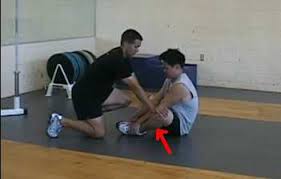
EXPLAIN THE GENERAL SYNDROME OF ADAPTATION AND ALL ITS PHASES. GIVE AN EXAMPLE
The General Syndrome of Adaptation (GAS) is a three stages procces that describes the physiological changes the body goes through when is under stress.
The three stages in which it is divided are:
1. Alarm reaction Stage: The Alarm Reaction Stage refers to the initial symptoms the body experiences when is under stress. This natural reaction prepares you to either flee or protect yourself in dangerous situations
2. Resistance stage: After the initial shock of a stressful event, the body begins to repair itself. It releases a lower amount of cortisol, and your heart rate and blood pressure begin to normalize.
3.Exhaustion: This stage is the result of prolonged or chronic stress. Struggling with stress for long periods can drain your physical, emotional and mental resources to the point where your body no longer has strenght to fight stress.
EXAMPLE:
- Failing an important exam
-Losing a close familiar
-Feeling lonely
EXPLAIN THE THRESHOLD LAW BY ARNOLD SCHULT. ILLUSTRATE WITH AN EXAMPLE.
This theory starts from the existence of a minimum threshold or stimulus necessary for somebody to produce, improve or adapt in the organism
It is a very personal issue. There is also a maximum tolerance or point from which only the fatigue and overtraining. According to this law,adaptation occurs as a result of physical efforts proposed in a consistent and appropiate manner so that the organism assimilates them progressively.
1. In the first case is very far from the threshold so neither the training is given nor improvements
2. In the second case at best if you could give the training if the job was repeated several times, but what would be achieved more that nothing would be fatigue and decreased performance.
3. The third case would be the ideal, in the musce, technical, organic, improvements are achieved
4. In the fourth case is not achieved any improvement and leads overtraining and fatigue.
EXAMPLE:

WHAT IS THE TRAINING LOAD AND WHAT ARE ITS COMPONENTS? EXPLAIN THEM AND GIVE AN EXAMPLE OF EACH ONE
In sports training load is a central phase through which performance of a sportsman is improved.
Every sports training consists of physical exercises which cause fatigue. Fatigue is directly a product of training load which helps in the process of adaptation.
Therefore training load and fatigue are important for any kind of sportsman performance.
COMPONENTS:
Volume: Training volume is the amount of work done.
EXAMPLE: If I go to the gym for 1 hour, the volume 1 hour
Intensity: Training intensity is how hard you train.
EXAMPLE: If I do a Farleck the Intensity is the type of Farleck (Low, Medium, High)
Frequency: Training frequency is how often you perform certain move, practice certain exercise or train certain muscle.
EXAMPLE: If I go running 2 times per week the frequency is 2 times per week
Density: Training density is the relation between work and each pause.
EXAMPLE: Reduce fatigue having breaks.
Duration: Is the repetitivity of the stimulus
EXAMPLE: If I do 20 push-ups the duration is 20.
EXPLAIN THE PRINCIPLES OF TRAINING ACCORDING TO THE CLASSIFICATION OF OLIVER (1985) AND ZINTL (1991)
FNP (PNF in English) means PROPIOCEPTIVE.NEUROMUSCULAR.FACILITATION and it is a stretching technique used to improve muscles elasticity and has been shown to have a positive effect on active and passive ranges of motions.
4 Phases are mainly differentiated:
1.A first passive stretching during 20 seconds
2.Followed by an isometric contraction of 8 seconds
3.A rest of approximately 5 seconds
4.And ending with a new passive stretching for 20 seconds
EXAMPLES:
Hamstrings: FNP of hamstrings consists of sitting on the floor and trying to touch your feet at the same time your partner is pushing you.
Quadriceps: FNP of quadriceps consists on lying down on the floor while our partner pushes our back with his arm and takes our leg to our waist.
EXPLAIN THE GENERAL SYNDROME OF ADAPTATION AND ALL ITS PHASES. GIVE AN EXAMPLE
The General Syndrome of Adaptation (GAS) is a three stages procces that describes the physiological changes the body goes through when is under stress.
The three stages in which it is divided are:
1. Alarm reaction Stage: The Alarm Reaction Stage refers to the initial symptoms the body experiences when is under stress. This natural reaction prepares you to either flee or protect yourself in dangerous situations
2. Resistance stage: After the initial shock of a stressful event, the body begins to repair itself. It releases a lower amount of cortisol, and your heart rate and blood pressure begin to normalize.
3.Exhaustion: This stage is the result of prolonged or chronic stress. Struggling with stress for long periods can drain your physical, emotional and mental resources to the point where your body no longer has strenght to fight stress.
EXAMPLE:
- Failing an important exam
-Losing a close familiar
-Feeling lonely
EXPLAIN THE THRESHOLD LAW BY ARNOLD SCHULT. ILLUSTRATE WITH AN EXAMPLE.
This theory starts from the existence of a minimum threshold or stimulus necessary for somebody to produce, improve or adapt in the organism
It is a very personal issue. There is also a maximum tolerance or point from which only the fatigue and overtraining. According to this law,adaptation occurs as a result of physical efforts proposed in a consistent and appropiate manner so that the organism assimilates them progressively.
1. In the first case is very far from the threshold so neither the training is given nor improvements
2. In the second case at best if you could give the training if the job was repeated several times, but what would be achieved more that nothing would be fatigue and decreased performance.
3. The third case would be the ideal, in the musce, technical, organic, improvements are achieved
4. In the fourth case is not achieved any improvement and leads overtraining and fatigue.
EXAMPLE:
WHAT IS THE TRAINING LOAD AND WHAT ARE ITS COMPONENTS? EXPLAIN THEM AND GIVE AN EXAMPLE OF EACH ONE
In sports training load is a central phase through which performance of a sportsman is improved.
Every sports training consists of physical exercises which cause fatigue. Fatigue is directly a product of training load which helps in the process of adaptation.
Therefore training load and fatigue are important for any kind of sportsman performance.
COMPONENTS:
Volume: Training volume is the amount of work done.
EXAMPLE: If I go to the gym for 1 hour, the volume 1 hour
Intensity: Training intensity is how hard you train.
EXAMPLE: If I do a Farleck the Intensity is the type of Farleck (Low, Medium, High)
Frequency: Training frequency is how often you perform certain move, practice certain exercise or train certain muscle.
EXAMPLE: If I go running 2 times per week the frequency is 2 times per week
Density: Training density is the relation between work and each pause.
EXAMPLE: Reduce fatigue having breaks.
Duration: Is the repetitivity of the stimulus
EXAMPLE: If I do 20 push-ups the duration is 20.
EXPLAIN THE PRINCIPLES OF TRAINING ACCORDING TO THE CLASSIFICATION OF OLIVER (1985) AND ZINTL (1991)
The principles of sports training are
defined as general rules are applied as the training of any sports discipline,
that is, the aspects that occur by the simple fact of applying physical stress
to the body.
Oliver establishes the following categories to classify the different principles:
- Principles related to the stimulation of physical conditioning.
This says that the traininig stimulus must overcome a certain threshold of intensity to be able to initiate an adaptive reaction, to have an effect in the training.
- Principles related to the systems to which said stimulus is directed.
A stimulus is any change that is capable of producing a response from the organism. The receptors are very specialiszed structures capable of perceiving the stimuli and converting them into nervous impulses. There are two groups. Internal and external.
- Principles related to the response to said stimulus.
The stimuli respond to reactions of the environment or their own, and are subject to the nature of the action that precede it becoming a situational chain in which the process is repeated, being: A stimulus that precedes a perception and this causes an action, where the cycle returns and repeats itself because the action is the stimulus that precedes another perception that originates another action.
Zintl encompasses its proposed principles in three groups:
- Those who initiate the adaptation.
The adaptation to physical effort in the development of basic physical abilities. Following the definition of Alvarez del villar, the adaptation is the ability of living beings to maintain a constant balance of their functions before the stimuli that affect them.
- Those that guarantee adaptation.
In a complete macrocycle, we will have mesocycles or microcycles in which we need to perform very strong stimuli, but we must know how to control stages and guide our training correctly bases on our objetives. I repeat we can't always train heavy, since, our central nervous system would not support it, and our muscles either.
- Those who exercise a specific control of adaptation.
Those who exercise specific control over adaptation. In order to make adaptation processes specific for each person, it is necessary to follow some principles, for example the individualization. Training loads should be specifically oriented towards the personal and individual person: ( age, sex, motor skills)
- Principles related to the stimulation of physical conditioning.
This says that the traininig stimulus must overcome a certain threshold of intensity to be able to initiate an adaptive reaction, to have an effect in the training.
- Principles related to the systems to which said stimulus is directed.
A stimulus is any change that is capable of producing a response from the organism. The receptors are very specialiszed structures capable of perceiving the stimuli and converting them into nervous impulses. There are two groups. Internal and external.
- Principles related to the response to said stimulus.
The stimuli respond to reactions of the environment or their own, and are subject to the nature of the action that precede it becoming a situational chain in which the process is repeated, being: A stimulus that precedes a perception and this causes an action, where the cycle returns and repeats itself because the action is the stimulus that precedes another perception that originates another action.
- Those who initiate the adaptation.
The adaptation to physical effort in the development of basic physical abilities. Following the definition of Alvarez del villar, the adaptation is the ability of living beings to maintain a constant balance of their functions before the stimuli that affect them.
- Those that guarantee adaptation.
In a complete macrocycle, we will have mesocycles or microcycles in which we need to perform very strong stimuli, but we must know how to control stages and guide our training correctly bases on our objetives. I repeat we can't always train heavy, since, our central nervous system would not support it, and our muscles either.
- Those who exercise a specific control of adaptation.
Those who exercise specific control over adaptation. In order to make adaptation processes specific for each person, it is necessary to follow some principles, for example the individualization. Training loads should be specifically oriented towards the personal and individual person: ( age, sex, motor skills)
06/11/2018

Subscribe to:
Posts (Atom)